
What Is a Crypto Card and How Is It Different From a Bank Card?
Paying for your morning coffee or booking a flight no longer requires you to pull out your bank card. More and more people are now spending directly from their crypto wallet, using a card that works j
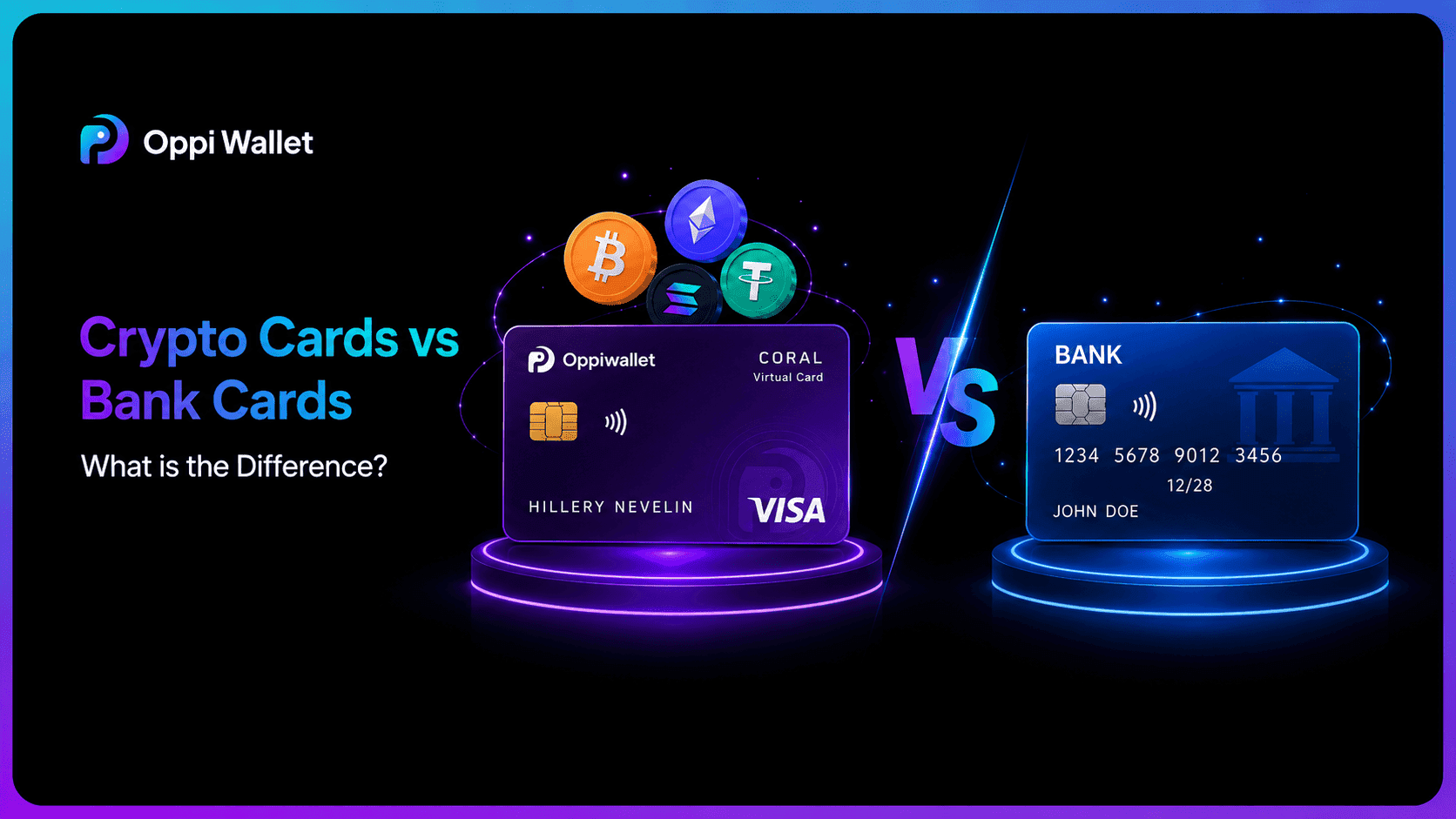
Paying for your morning coffee or booking a flight no longer requires you to pull out your bank card. More and more people are now spending directly from their crypto wallet, using a card that works just like the bank card already in their pocket.
This is called a crypto card, and it's becoming a simple way to use digital assets in everyday life and spending in crypto.
An X account reported on 27th May, that monthly volumes are now up +230% since May 2025. This growing acceleration means that people have started realizing that why was cryptocurrencies invented.
Before we dive in, there's one question most people have in mind: Is a crypto card the same as a debit card?
No, not exactly. A crypto card looks and works like a debit card at checkout, but instead of deducting funds from fiat currency, it withdraws money from your crypto wallet.
The crypto is automatically converted to fiat at the point of sale, so the merchant always gets normal currency. The merchant will not even know that you paid in crypto.
In this guide, we’ll explain exactly what a crypto card is, how it works behind the scenes and how it compares to a traditional bank card, so you can decide whether it fits the way you want to spend your crypto.
1. What Is a Crypto Card?
A crypto card is a payment card, usually a Visa or Mastercard network, that can be used to spend cryptocurrency at regular shops, cafe, dinner, online and offline shopping, or even booking a flight using crypto.
Instead of connecting to a traditional bank account, it links directly to your crypto wallet balance.
Currently these cards are provided by crypto wallets and platforms only.
A wallet which provides virtual crypto card features will typically hold a license, it can be VASP, CASP, or any other country crypto license. This tells that they are bound by rules and regulations that means handling crypto-to-fiat transactions safely and legally.
Crypto cards have built-in networks like Visa or Mastercard, which means they can be used nearly everywhere a regular debit or credit card can be used.
You can just imagine that you can use it at any local store to international shops, or even for booking flights. For instance, Oppi Wallet's crypto card is accepted by more than 110m+ merchants present in more than 210 countries because our card uses the VISA or Mastercard network.
A crypto card is used in a similar way to any other card, swipe and pay or connect with GPay or Apple Pay for contactless payments.
If you want to see how this works for everyday purchases, then you can read our guide on using a virtual crypto card for spending.
2. How Does a Crypto Card Work?
Using a crypto card might sound a bit tough, but actually it is as simple as using your bank card. This is how it works in the backstages:
-
Top up your card balance using crypto from your wallet. We would recommend using stablecoins like USDT for this.
-
When you top-up your card, the card converts the crypto to fiat currency in real time, at the current market rate.
-
Whether it’s an online merchant, OTT platform, local shop, restaurant, or any other merchant who accepts either VISA or Mastercard, they will get the same fiat (regular money) they'd get with regular card payment.
-
You don’t need to manually sell your crypto on an exchange first or buy a gift card using crypto and then spend it.
This is how it works in real life.
Imagine you buy lunch using your crypto card. The terminal processes the payment in exactly the same way as any Visa or Mastercard at the point of sale.
But behind the scenes, the actual work is happening, the amount of crypto needed to cover that purchase leaves your wallet at the live market rate and is converted into fiat currency before the money is transferred.
This process takes anywhere from a few seconds to a maximum of 1-2 minutes. This step isn't managed by you and not something you have to do; it just comes as a part of the transaction.
There are many wallets and platforms nowadays who provide virtual crypto cards as well as physical crypto cards. But you have to complete KYC, once your KYC is completed, you can start using your crypto card and begin spending instantly using your crypto wallet.
Multiple virtual crypto card providers charge around $10, while you can also get a free virtual crypto card. This depends on the card benefits.
While every physical crypto card provider charges based on the limits and benefits they are providing. The pricing ranges from $5 to more than $100.
Since virtual cards are set up online, most providers allow you to use your card in mere minutes after it's been approved. This means, users can open up a wallet and make their first tap to make a payment purchase in the same sitting, instead of waiting days for physical crypto cards to arrive in the mail.
With Oppi wallet, the virtual crypto card is powered by a VISA that becomes available after KYC (identity verification) is complete, while the physical card is a Visa that shares the same balance as the virtual one.
Meanwhile, adding funds to your wallet is not another hard task.
Most wallets let you transfer crypto to your card balance from whichever network you already have it on, and some wallets, including Oppi Wallet, even have a network selector, so you can choose a route with lower transaction fees before you top-up.
Once you confirm the top-up amount, it converts automatically using the live market rates, so you don't have to calculate or swap crypto coins manually before you pay.
3. Crypto Card vs Bank Card: Key Differences
|
Feature |
Crypto Card |
Bank Card |
|
Funding source |
Crypto wallet |
Bank account |
|
Currency held |
BTC, ETH, USDT and other supported coins |
Any Fiat currency |
|
Issuer |
Regulated Crypto platform |
Bank |
|
Conversion |
Crypto converted to fiat automatically at checkout |
Not needed, already fiat |
|
Global spending |
Works well cross-borders with multi-chain wallets |
Depends on the bank's network and international fees |
In practicality, the biggest difference between a normal credit/debit card and crypto card is that. Normal cards use a fiat currency, you can not use any different currency.
But with crypto cards, you can use any crypto you hold to top-up your card, and pay.
Suppose two friends are on a weekend trip with the plan that they split the bill. One will spend using a bank card that is tied to their bank account, the other will spend using a crypto card tied to their wallet. It seems that both payments are exactly the same at the moment, you tap and approve and you're done. What is really at stake is several steps upstream, what's actually backing the payment and how it gets converted along the way.
This is also why crypto cards tend to suit people who already hold crypto as part of their day-to-day finances, rather than those buying crypto purely to sell them in the future to book some profits.
4. Who Is a Crypto Card Actually For?
A crypto card is not just for people who hold a lot of crypto. It is built for anyone who wants to use their crypto in everyday life without going through a bank or an exchange first. Here are the people who benefit the most from having one.
Active crypto traders
People who buy and sell crypto regularly often end up with balances sitting idle across different wallets or exchanges. A crypto card lets them spend that balance directly, without needing to withdraw to a bank account first or wait for a bank transfer to clear.
Self custody users
Many crypto holders prefer to keep their funds in their own wallet instead of leaving them on an exchange. A self custody crypto card, like the one built into Oppi Wallet, lets these users keep full control of their private keys while still being able to spend their crypto the moment they need to.
Digital nomads and remote workers
People who travel often or work from different countries deal with currency exchange, foreign transaction fees, and cards that sometimes do not work abroad. A crypto card that works in 210 plus countries removes that problem completely, since one card and one balance work almost everywhere.
Freelancers and Web3 professionals
A growing number of freelancers and Web3 workers are paid directly in crypto. Instead of converting that income to fiat through an exchange, they can use a crypto card to pay for daily expenses straight from their crypto balance, which saves both time and conversion fees.
Crypto beginners exploring real world use
Someone new to crypto does not need to hold a large amount to benefit from a card. A crypto card is a simple, low risk way to try spending crypto in daily life, whether that is a coffee, a taxi, or an online subscription, without changing how they normally bank.
5. Benefits of Using a Crypto Card
Once you start using a crypto card for everyday spending, the advantages become clear fairly quickly.
Spend crypto without selling it first
Normally, spending crypto means selling it on an exchange, waiting for the funds to clear, then transferring money to your bank account before you can use it.
A crypto card removes those extra steps completely, since you can spend directly from your crypto balance the moment you need to.
There was also another way of spending crypto, in which you can buy a gift card, but why walk, when you can afford a bike.
Keep control of your funds until the moment you spend
With a self custody crypto card, your funds stay in your own wallet right up until you top up your card.
If you are new to this idea, it is worth understanding how self custody wallets work, since this is the main reason self custody cards feel different from a normal bank card. You are not trusting a third party to hold your money for you.
A useful option if you do not have easy access to traditional banking
Not everyone has smooth access to a bank account, especially people living or working across borders.
A crypto card gives these users a practical way to spend money without depending on a traditional banking system.
Built for travel and spending in local currency
When you use a crypto card abroad, your payment is converted and processed in local currency automatically, so you avoid the manual currency exchange most travellers deal with, though you have to pay FX fees but it is lower depending on the card, some premium cards charge 0 FX fees as well.
This is especially useful for digital nomads, and it works well alongside other crypto based travel tools, such as learning how to book flights and hotels with cryptocurrency.
Together, these benefits mean a crypto card fits into how you already use crypto, rather than asking you to change your habits just to spend it.
6. Things Beginners Should Know Before Getting One
Before getting a crypto card, there are a few practical things worth understanding so there are no surprises later.
Crypto prices can move between top-up and spend
Cryptocurrency prices change constantly, today it is up, the very next it will go down, so the value of your balance when you top up your card can be different from its value when you actually spend it.
This matters most for large purchases, since even a small price swing can noticeably change what you end up paying in real terms. Before making the final payment, calculate properly.
Compare fees across providers before choosing one
Not all crypto cards charge the same way, so it helps to compare a few before committing. Common fees to check include:
-
Activation fee, usually a one-time charge when you first get the card.
-
Transaction fees, charged per purchase.
-
Currency conversion charges, which apply when you spend in a currency other than the one your card is denominated in.
-
ATM withdrawal fees, which apply only to physical cards used for cash withdrawals.
Check the provider's regulatory and security standing
Not every crypto card provider is equally transparent about how they operate.
It is worth choosing a provider that is a licensed provider, since this means the company meets specific regulatory standards for handling crypto.
It is also worth checking whether the wallet linked to the card has gone through an independent security audit or not, Oppi Wallet is both VASP certified and independently audited by CyberScope.
If you are comparing virtual crypto card options, our guide to the best virtual crypto cards in 2026 breaks this down in detail.
Card availability depends on your country
Crypto cards are not available everywhere, and some providers apply extra verification steps or restrictions in certain countries due to local regulations.
Before relying on a card for regular spending, it is worth confirming that it is fully supported in your country and that there are no restrictions where you plan to use it most.
7. FAQs
What happens if crypto prices change after I load my card?
Your card balance reflects the fiat value locked in at the moment you top up, so day-to-day price swings in the market do not change what is already sitting on your card. The price only matters again the next time you top up, since that determines how much fiat your crypto converts into at that moment.
Can I use a crypto card without completing KYC?
No, reputable providers require KYC before issuing a card, since crypto cards run on regulated networks like Visa or Mastercard that mandate identity verification. Skipping KYC would mean using an unregulated provider, which carries higher risk of fund loss or account freezes. Though there are some providers who provide without KYC but they are not legal and user may get in trouble
Is there a spending or withdrawal limit on a crypto card?
Yes, most providers set daily or monthly spending and ATM withdrawal limits, and these vary depending on the card tier, your verification level, and local regulations. It is worth checking a provider's specific limits before relying on the card for large purchases.
What happens if I lose my crypto card or it gets stolen?
Since the card is linked to your wallet balance rather than holding crypto itself, most providers let you freeze or cancel the card instantly through the app, and your underlying crypto stays secure in your wallet. A replacement card can usually be issued without needing to move your funds.
Do I pay tax when I spend crypto using a crypto card?
In many countries, spending crypto through a card counts as a taxable disposal event, similar to selling it, since you are converting crypto to fiat at the point of sale. Tax treatment varies significantly by country, so it is worth checking local regulations or consulting a tax professional.
Can I withdraw cash from an ATM using a crypto card?
Yes, if you have a physical crypto card linked to a Visa or Mastercard network, most ATMs that accept those networks will work, though ATM withdrawal fees typically apply and vary by provider.
What is the difference between a virtual and a physical crypto card?
A virtual card is issued instantly after KYC and works for online payments and contactless mobile wallets like Apple Pay or Google Pay, while a physical card is a plastic Visa or Mastercard that arrives by mail and shares the same balance. Oppi Wallet, for example, offers both options linked to a single wallet balance.
Does using a crypto card affect my credit score?
No, crypto cards are prepaid or debit-style cards linked to your own funds, not credit lines, so they do not involve credit checks or affect your credit score.
8. Conclusion
A crypto card closes the gap between holding crypto and actually using it, letting your digital assets work the same way cash does at checkout without giving up control until the moment you pay. It looks and feels like any other Visa or Mastercard, but behind the scenes, your crypto stays in your own wallet right up until the transaction happens.
Compared to a traditional bank card, a crypto card lets you spend directly from your holdings instead of manually converting to fiat first, all while keeping custody of your funds in your hands. This makes it a natural fit for crypto owners, self-custody users, digital nomads, and anyone earning in crypto who wants a simple way to handle everyday spending.
Before picking a provider, run through three quick checks: is it regulated, has the wallet been independently security audited, and is the card actually supported in your country. Getting these right upfront saves you from switching providers later.
If you are ready to try it, Oppi Wallet checks all three boxes, with a virtual card you can activate right after KYC. Download the app on App Store or Google Play to get started.